Orange tube tent set up in an outdoor nature scene

Coghlan's Guide to Emergency Shelters

Backpacking and hiking trips take plenty of planning before you even hit the trails. You've probably dialed in your gear list, prepped your meals and picked out the right layers, but the outdoors can still throw some surprises your way. That's why it's always smart to pack emergency and survival gear essentials, including an emergency shelter. This can be the difference-maker for your well-being if the weather shifts or a severe injury causes you to stay out longer than expected. Let's take a look at why emergency shelters matter, and the options available, so you can find the one that's best suited for you.

Hand grabbing an orange survival tent from a backpack in a camp setting
Removing an emergency blanket from its green packaging over a nature background

The Basics:

Emergency shelters are simple: they’re lightweight, easy to assemble and offer an extra layer of protection from wind and rain. These aren’t meant to act as replacements for a proper tent, and should only be used in extreme circumstances such as severe weather or injury. The three main components of an effective emergency shelter are as follows:

  • Provides Protection from the Elements: Wind, rain, snow and cold temperatures not only cause general discomfort but can lead to frostbite and in extreme cases, hypothermia. An insulating layer between you and the elements, or even the ground, will help to conserve body heat and energy for longer periods of time. You never know how long you will be waiting for rescue or for a storm to pass.
  • High Visibility: Now is not the time to blend in. Having a bright or reflective material on the exterior improves visibility for search and rescue teams on the lookout. Whether on the ground or in the air, bright oranges and yellows are much easier to spot amid the rocks and trees.
  • Compact: It’s not the most glamorous tent set-up, and it’s not meant to prioritize comfort. To effectively retain warmth, the emergency shelter needs to be big enough that you’re able to be contained within it and shielded from the elements, but not so big that your body heat will become too dispersed. An 8 x 10 ft. tarp or ground sheet will provide enough coverage for 2 people.
Orange tube tent shelter set up in a forest setting with trees and rocks in the background

Types of Emergency Shelters:

Tube Tent:

For quick shelter when the weather turns, a tube tent is a simple piece of gear that can make a big difference. Made from durable, waterproof polyethylene, it is essentially a lightweight plastic tube that can be strung up in minutes with some lengths of paracord and then staked down with tent pegs, or large rocks in a pinch. Once set up, you can crawl right in and have head-to-toe coverage from the elements. While this material is not as effective in retaining body heat, the purpose of the tube tent is to provide a small, protected shelter that can easily take along in your pack and allows for quick set-up and tear down. It’s not fancy, but it’s reliable and provides a roof over your head when you need it most.

Person camping in a tarp shelter and bivy in front of a small fire

Bivy:

A bivy is another means of windproof, waterproof shelter in a pinch. With their reduced pack size, and ultralight construction, they are often the emergency shelter of choice for hikers, climbers and others seeking adventure off the beaten path. With their durable nylon base and top layer of ripstop nylon, which is treated with a breathable and waterproof coating, bivies are able to easily retain heat while avoiding moisture build-up. However, bivies aren’t for everyone. If you want to have a bit of extra breathing room, or consider yourself to be claustrophobic, a bivy is not for you. The last thing you want in an emergency is to cause yourself more stress and anxiety.


woman sitting in the forest wrapped in an emergency blanket

Emergency Blanket/Bag:

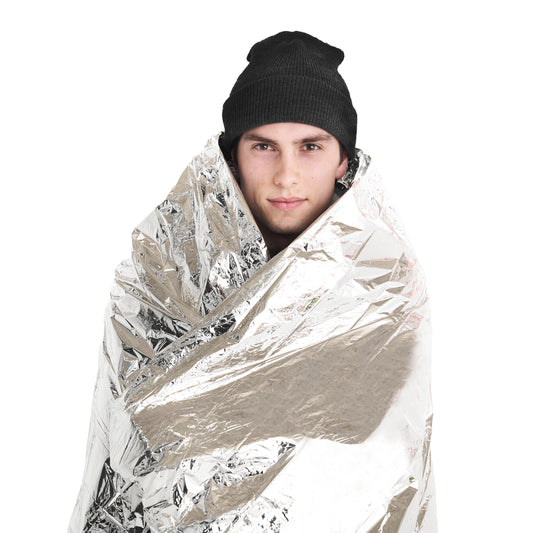
An emergency blanket is one of those small items that you could be very glad you threw in your pack before you hit the trails. Thanks to their aluminized polyester construction, emergency blankets and bags can easily retain body heat to keep you warm even in freezing temperatures. While often grouped with emergency shelters, they’re more of an additional survival tool that is supplementary to a stand-alone shelter set-up. Emergency blankets and bags are best used for their namesake purpose and wrapped directly around you. In a pinch they can act as a ground sheet or as a windbreak to provide a bit of relief from the weather, but beyond this we would highly recommend a more robust shelter.

Know Before You Go:

Oddly enough, when you're out in freezing temperatures, getting too warm can be just as dangerous as getting too cold. Overheating can lead to sweat becoming trapped between layers of clothing and your skin. When you stop to rest, this causes the sweat to cool, quickly, and then reduces your overall body temperature. Once your clothing is wet and cold it becomes very difficult to maintain or increase heat. Be mindful of your layers and be sure there is a form of ventilation to help with moisture control.

We know what you’re thinking, "This does not make me want to go trekking into the backcountry!" But we promise that emergency situations are rare, and often preventable! Before you head out on your next adventure, take time to acknowledge and prepare for these potential emergency situations by packing the right gear and learning how to use it.

Don’t let a worst-case scenario mindset get in your way of exploring the great outdoors. Instead, use it as a tool to help you become more confident in your survival skills.