The Basics:
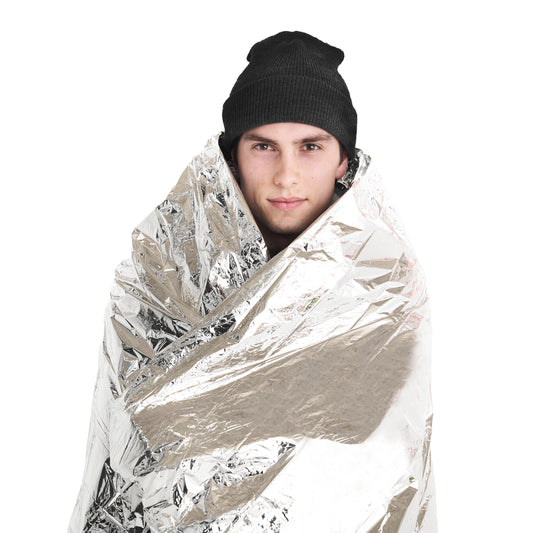
Emergency shelters are simple: they’re lightweight, easy to assemble and offer an extra layer of protection from wind and rain. These aren’t meant to act as replacements for a proper tent, and should only be used in extreme circumstances such as severe weather or injury. The three main components of an effective emergency shelter are as follows:
- Provides Protection from the Elements: Wind, rain, snow and cold temperatures not only cause general discomfort but can lead to frostbite and in extreme cases, hypothermia. An insulating layer between you and the elements, or even the ground, will help to conserve body heat and energy for longer periods of time. You never know how long you will be waiting for rescue or for a storm to pass.
- High Visibility: Now is not the time to blend in. Having a bright or reflective material on the exterior improves visibility for search and rescue teams on the lookout. Whether on the ground or in the air, bright oranges and yellows are much easier to spot amid the rocks and trees.
- Compact: It’s not the most glamorous tent set-up, and it’s not meant to prioritize comfort. To effectively retain warmth, the emergency shelter needs to be big enough that you’re able to be contained within it and shielded from the elements, but not so big that your body heat will become too dispersed. An 8 x 10 ft. tarp or ground sheet will provide enough coverage for 2 people.
Know Before You Go:
Oddly enough, when you're out in freezing temperatures, getting too warm can be just as dangerous as getting too cold. Overheating can lead to sweat becoming trapped between layers of clothing and your skin. When you stop to rest, this causes the sweat to cool, quickly, and then reduces your overall body temperature. Once your clothing is wet and cold it becomes very difficult to maintain or increase heat. Be mindful of your layers and be sure there is a form of ventilation to help with moisture control.
We know what you’re thinking, "This does not make me want to go trekking into the backcountry!" But we promise that emergency situations are rare, and often preventable! Before you head out on your next adventure, take time to acknowledge and prepare for these potential emergency situations by packing the right gear and learning how to use it.
Don’t let a worst-case scenario mindset get in your way of exploring the great outdoors. Instead, use it as a tool to help you become more confident in your survival skills.